
The current global trend in layer production is towards lengthening the production cycle, making it possible to reduce the impact of the cost of pullets on the cost of egg production. To achieve this target, the main challenges lie in keeping the layers in good condition and maintaining a high production level and good eggshell quality until the end of the flock.
As a layer breeder company, NOVOGEN has always prioritized these traits in its R&D program so as to meet egg farmers’ expectations. Nonetheless, in order to fulfil the layers’ genetic potential, the management and nutrition of the flock must be closely monitored and adapted to the local environment.
OPTIMAL PULLET QUALITY
It is well known that a major aspect of achieving successful layer flocks is ensuring pullet quality. During the rearing period, close attention must be paid to flock growth and preparation for laying.
Body weight and uniformity are the main indicators for monitoring the condition of a layer flock during rearing. It is therefore essential to carry out regular monitoring! A low average weight and/or high flock heterogeneity during the rearing period will have adverse effects on future production capacity. Multiple parameters (lighting and food programmes, compliance with breeding, sanitary standards, etc.) must therefore be respected and adjusted if necessary in order to allow the breed to best express its genetic potential.
For more information on this subject: Essential points to obtain a good layer pullet.
EGG QUALITY MANAGEMENT
- Managing egg size
It is easier to maintain a good egg quality with small and medium egg sizes, which have a harder shell. The quality of large eggs is more difficult to maintain until the end of a long production cycle due to additional calcium requested for calcification. Once in production, the only way to adjust egg weight is through nutrition, knowing that the older the flock gets the less efficient it will be.
Main nutrition tools:
- Energy and Oil: these 2 nutrients are closely linked and have a positive effect on egg weight. They are particularly useful at the start of production in order to favour a rapid increase in egg weight. Afterwards if bigger eggs are requested, adding oil seems more efficient than adding energy. It is also less risky since too much energy in the diet can result in fatty birds. The ideal situation is to provide at least 1 % of oil with the same energy level.
- Protein & Amino Acids (AA): a variation of 1 % in protein changes the egg weight by 1.65 % (data from our NOVOGEN meta-analysis of publications). The main AAs to affect egg weight are methionine and lysine. Slowly decreasing their levels in the feed formula can reduce the phenomenon of egg weight increase during production.
It is recommended to invest in nutrition at the onset of lay to achieve a high production peak and a rapid increase in egg weight. Afterwards, it is possible to begin optimizing the feed formula. The target is to decrease the intake of energy, protein and AA (especially methionine) to avoid big eggs. Since lysine and methionine are also involved in the laying percentage, it is necessary to provide enough of both, otherwise production could drop faster. Nutrition is always a compromise between feed costs and expected results, which depend on the conditions of each farm.
- Eggshell quality
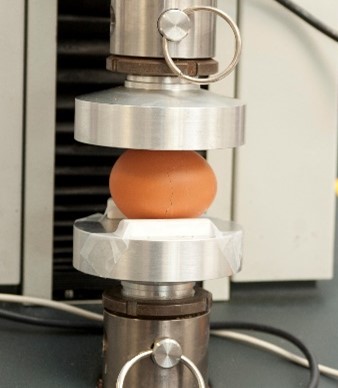
Eggshell quality has become even more critical with the lengthening of production cycles and the development of automatic egg collection systems. Substantial genetic progress has been made by NOVOGEN in this domain. However, diet and feeding techniques are key to realising the potential of this genetic progress.
Photo: Shell strength measure
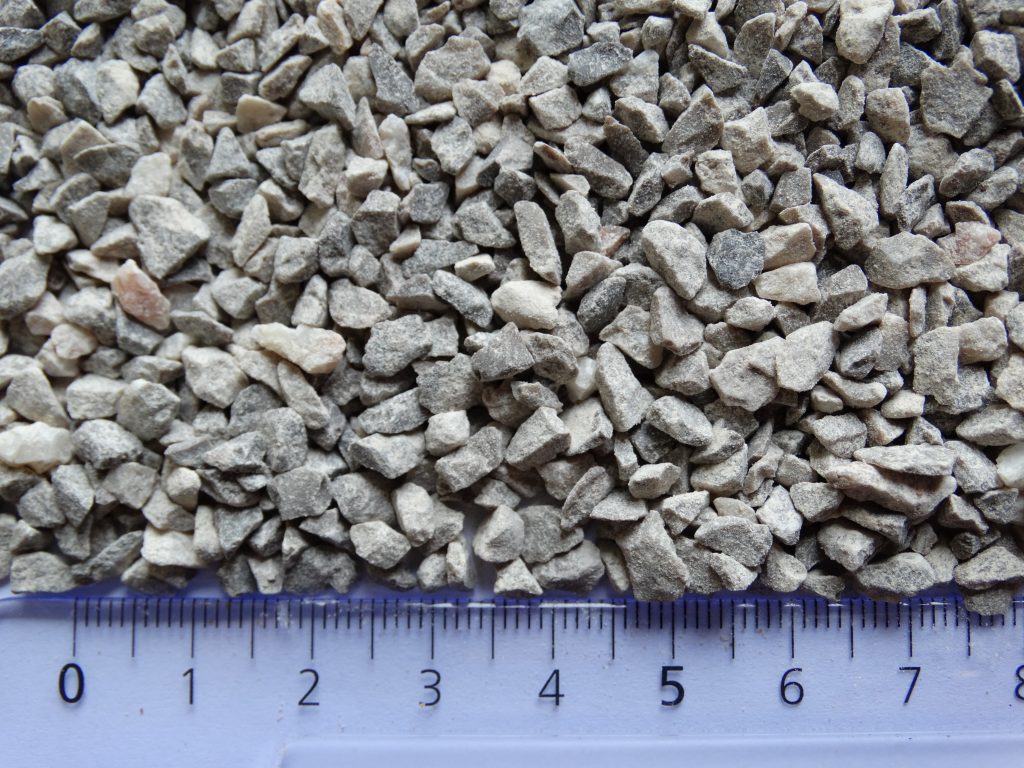
Eggshell quality depends essentially on the hen’s ability to use its dietary calcium during shell formation, i.e. shortly before nightfall until oviposition. A good calcium diet during the production period improves eggshell quality and colour, and prevents bone demineralization (osteoporosis and fractures). The quality of the calcium in the diet is determined by how this mineral is presented, i.e. particle size and powder vs coarse form within the ration, and the calcium content of the feed. A minimum amount of coarse carbonate (2-5 mm) is required to supplement the intake of carbonate powder (< 0.2 mm) and thus provide a continuous supply of calcium throughout the night.
It is particularly important to increase the calcium content after 45 weeks to satisfy the increasing calcium requirements due to larger egg sizes, and to compensate for the natural decrease in shell quality with age.
It is particularly important to increase the calcium content after 45 weeks to satisfy the increasing calcium requirements due to larger egg sizes, and to compensate for the natural decrease in shell quality with age.
Photo: Coarse Carbonate
Eggshell quality also depends on the solubility of the calcium. A poorly soluble calcium should be used to achieve a good retention rate. A calcium solubility that is too high or too low negatively impacts shell quality. However, hens that have not completed their calcification once the lights have been turned on need a very rapid supply of highly soluble calcium. It is thus important to keep some calcium in powder form in the diet, and ensure this is available in sufficient quantity in the morning during lighting.
Feed distribution also has an important effect on shell quality. When possible, hens should ingest more than 60% of their ration during the 6 hours prior to lights out in order to satisfy their specific calcium appetite. A fraction of this calcium intake is stored in the gizzard. Since hens do not eat during the night (calcification period), shell quality depends on the quantity of calcium remaining in the digestive tract at the end of the day.
In challenging condition, another way to improve shell quality is to encourage hens to consume calcium in the middle of the night by using a midnight light when this is allowed by local regulations.
OPTIMAL LAYER CONDITION
- Gut health
All nutrients enter the birds’ system via the gut. In cases of dysbiosis or leaky gut, the feed assimilation is reduced and nutrients are thus lost. This can negatively impact the egg production or egg quality. It is important to regularly check the quality of the droppings, which provide an indication of gut health. In terms of nutrition, an excess or lack (but mainly excess) of energy and protein can result in gut disorders with, for example, increased fermentation. Use only the right amount of energy and protein, without excess, to ensure a good production.
- Liver health
The liver plays a role in egg formation, particularly in the deposition of fat inside the yolk. If there is no oil or fat in the diet, the liver will create them from starch. This process is harder than from oil where the liver directly uses the free fatty acids. A long production cycle is not possible without a good liver status. In terms of nutrition, it is recommended to provide a minimum of oil in the diet and to regularly administer a liver-protection treatment. In addition, an adequate level of choline should be used in the feeds. Betaine is also a guarantee that the choline & methionine will be used at 100 % along their ideal metabolic pathways. In addition, this helps to fight against any heat stress.
- Optimal feed intake
A good persistency is enabled by healthy birds with a good appetite, which prevents them from having to use their reserves. A suitable feed intake can induce a higher production rate due to the high intake of protein, energy, AA, fat, etc. As mentioned previously, it is important to start developing the birds’ appetite during the rearing period so that they can deal with the rapid increase in consumption at the start of lay. Once in production, adjusting the presentation of the feed can be a useful tool. The amount of feed consumed results from a choice made by the bird, involving particle selection. Being grain eaters, their consumption is related to how their feed is presented. Poultry prefer particles over mash. As such, providing too finely ground feed may lead to reduced feed intake which can generate deficiencies. By adapting the feed presentation, it is possible to manage the feed intake and consequently the intake of the nutrients and additives required. This makes it possible to maintain a high persistency and egg quality over a longer production cycle.
CONCLUSION
The continued genetic progress made by NOVOGEN has allowed significant gains in both egg production and egg quality. It has made it possible to keep flocks in production for ever longer periods. In order to allow the birds to realise their genetic potential, all other parameters such as management, nutrition, biosecurity and prophylaxis have to be closely controlled and monitored.
Published in International Poultry Production – Volume 29 Number 3- May 2021